The Descalzas Reales: a visitor’s guide
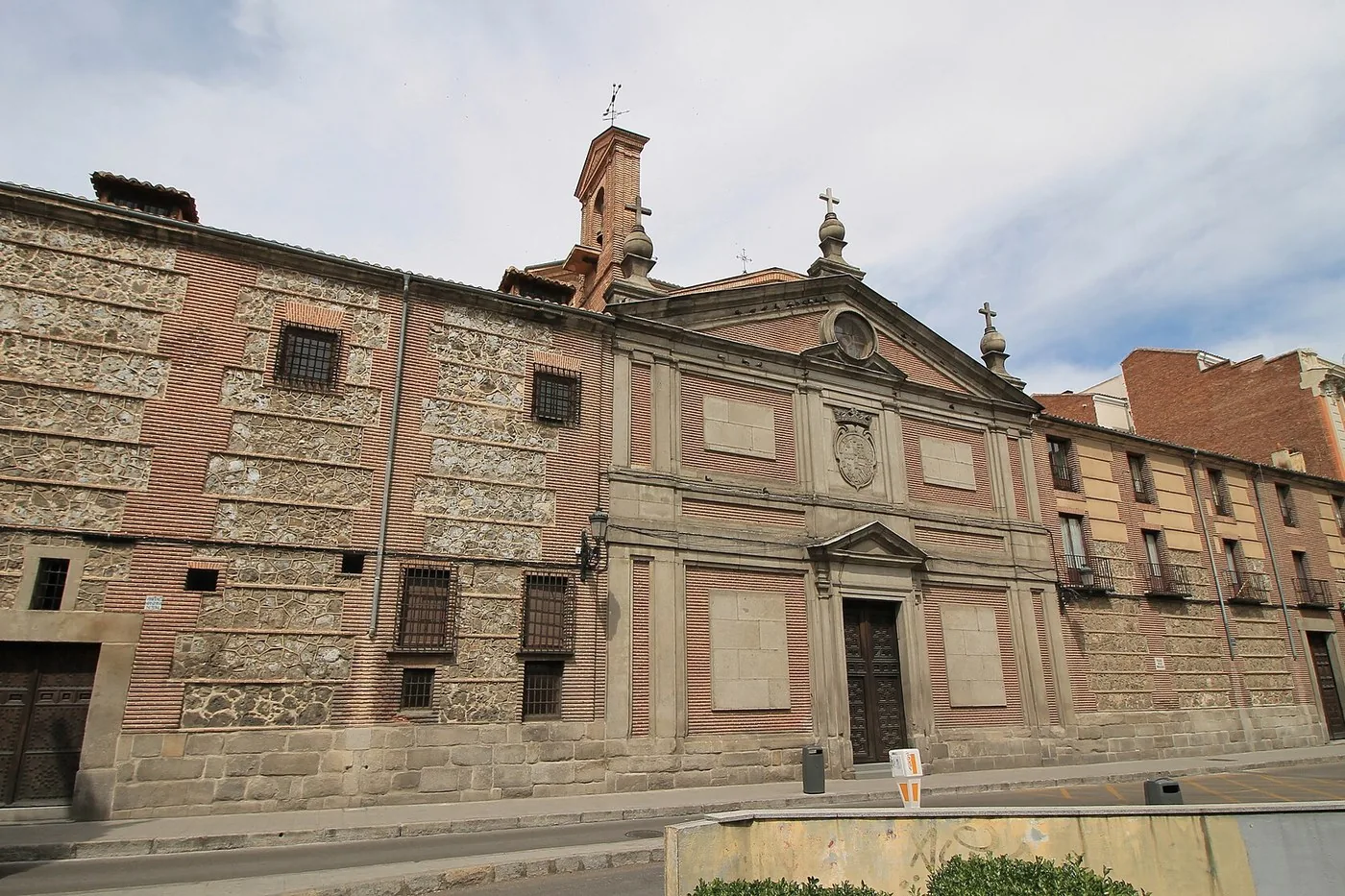
The Monasterio de las Descalzas Reales is a working Poor Clare convent on a small square between Puerta del Sol and Callao. You cannot wander it. Entry is by timed guided visit only, in a small group, with a Patrimonio Nacional guide — buy the ticket at Patrimonio Nacional, or book the English-language guided tour if you want a guide in English and a slot held for you. It is closed every Monday.
I have walked through this place more times than I can count. In Spanish and English. With guides who know the history cold and guides who rush past the Rubens tapestries like they are wallpaper. With groups of twenty and groups of four. What I have learned is this: the Descalzas Reales is one of the best things to see in Madrid, but only if you understand how to visit it. It is not like other museums. You do not buy a ticket and wander freely. You show up at a time slot, a guide takes you through in a group, and you either listen or regret it for years. Here is what actually matters.
Why a royal palace became a barefoot convent
In 1559, Juana de Austria — daughter of Emperor Charles V, sister of Philip II, mother of King Sebastian of Portugal — converted her own palace into a convent. She was thirty-four and a widow. The Poor Clare nuns she brought in followed the reformed rule: no possessions, no shoes, poverty as spiritual practice. The name “Descalzas Reales” means the Royal Barefoot Nuns. Juana lived here for the last fourteen years of her life and died at El Escorial in 1573. Her tomb, with her kneeling in prayer, is in the church presbytery. You see it at the end of the visit, if the guide does not rush.
A working convent still sits here. You do not see the cloister proper. Visitors walk the parts that were once the royal quarters. It is an important distinction. This is not a museum that happens to be in a building where nuns also live. It is a functioning community of sisters that permits visitors in rooms they have opened. That changes how you move through the space. You are a guest in a working convent, not a customer in a museum.
The moment the visit turns: the grand staircase
From the street, the building is plain. Brick and granite. A door you would walk past without noticing. You might think you have the wrong place. Then you climb the grand staircase. Every wall, every surface of the ceiling is covered in seventeenth-century fresco. The ceiling fresco of the glorification of Saint Clare is by Antonio Rizi. It is a moment of shock. A severe front, then this. That is when you understand why you are here.
Your guide will explain the frescoes. Or will not. I have seen both. The better guides linger and let you look. The rushed guides move you along after thirty seconds. If your guide is the rushing type, glance back as you leave the room. The composition and the light and the detail matter. You have paid to be in this room. Look at it properly.
What the art is doing in a convent
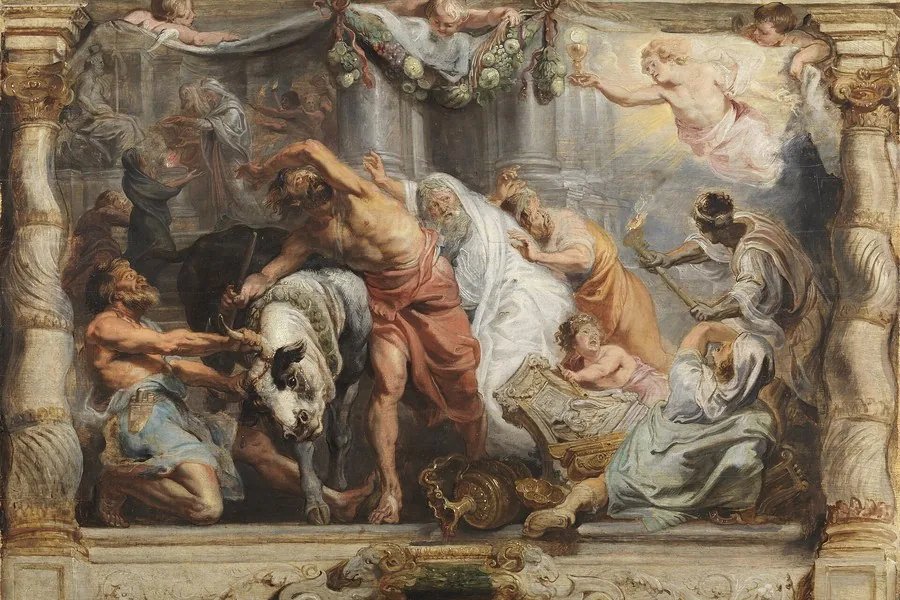
The monastery holds some of the finest painting and textiles in Madrid. Titian. Brueghel. Bernardino Luini. Luca Giordano. And the Rubens tapestries — the Brussels series of the Triumph of the Eucharist, woven in silk, wool and silver thread from cartoons by Rubens himself. One of the most valuable textile sets in Spain. Why? Because dowries. A working convent was a refuge and a charity house for royal women who had nowhere else to go or whose marriages ended. They brought their wealth with them. Isabel Clara Eugenia, the Infanta, sponsored the Rubens tapestries. María de Austria, the widow, retired here with her daughter Margarita and brought a lifetime of collecting. Those tapestries paid for their keep. The art is not in this convent because it is a museum. It is here because queens and royal women brought it when they became nuns.
The relicario is a room of reliquaries — pieces given by queens, many made by Flemish silversmiths. Madonna and Child sculptures, pieces of the True Cross, reliquaries holding pieces of saints. Your guide explains the provenance of each piece. It matters. These objects are the reason the Descalzas exists. They are the wealth of the community.
The practical reality: slots, guides, no cameras
You cannot simply walk in. Entry is guided only, in timed slots with no surcharge. Capacity is limited both to protect the rooms and respect the community. The Patrimonio Nacional ticket is €9. Reserve online at tickets.patrimonionacional.es or buy at the desk if space exists — it fills on weekends. Spanish is default; the GetYourGuide tour (€39) guarantees English and free 24-hour cancellation.
Photography and video are not allowed inside. It is non-negotiable and enforced. You cannot Instagram your way through a working convent. You have to be present. Pay attention. It is actually a gift, though it does not feel like it at the time.
Who goes and what to expect
The visit runs 60 to 90 minutes depending on the guide. It is not suitable for people with mobility impairments — there are stairs throughout. Not for people who need to photograph everything. Not for people who want to wander at their own pace. Perfect for anyone interested in sixteenth-century painting, Habsburg history, or the lives of royal women. The guides are professional and trained by Patrimonio Nacional. You cannot choose your guide, but the knowledge is consistent. Book the visit, show up on time, listen, and look at the staircase.
The bottom line
The Descalzas Reales is worth visiting if you care about the Habsburgs or sixteenth-century painting. It is specific, quiet, and real. Not a blockbuster. Not a quick stop. If you want to wander freely or photograph everything, it is not for you. I would rather spend ninety minutes here than two hours at a museum full of souvenir shops. Book the visit. Show up on time. Listen. Look at the staircase. Then get a coffee on the square before heading to the Prado.
Ready to book?
Buy the €9 ticket direct from Patrimonio Nacional if your Spanish is up to it. If you want the visit in English without gambling on the guide, the GetYourGuide tour below includes entry and an English-speaking guide — see what that actually costs before you decide, and whether it is worth it at all.
Frequently asked questions
Can I visit the Descalzas Reales without a guided tour?
No. Every visit is guided, in a timed slot, and the guide is included in the ticket price. See how the slots work.
How long does the visit take?
Allow roughly 60–90 minutes inside. Most people pair it with something else nearby — see what is within walking distance.
What is the single best thing inside?
The frescoed grand staircase, and it is not close. The Rubens tapestries run it a distant second. The full list is here.